

AN ORIGIN SHAPED BY EXTREME CONDITIONS
Long before aircraft, Bombardier was building machines for a very different environment.
In the 1930s, in rural Quebec, winters would isolate entire communities for months. Roads became impassable, and mobility, quite simply, disappeared. It is in this context that Joseph-Armand Bombardier developed his first tracked snow vehicles.
His objective was not innovation for its own sake, but access.
The earliest Bombardier machines were designed to restore movement, connecting people, services, and industries across environments where mobility could not be assumed. This idea would become foundational.
MOBILITY AT SCALE: FROM SNOW TO RAIL
Before aviation, Bombardier became a major player in ground transportation.
The company expanded its expertise from snow vehicles into large-scale mobility systems, most notably rail. Over the following decades, it developed trains, metros and transportation infrastructure across North America and Europe.
This phase is often overlooked, yet it is essential.
It introduced a different kind of complexity: reliability at scale, network coordination, and the continuous movement of people across vast territories. Mobility was no longer individual, it became systemic.
ENTERING AVIATION WITH A DIFFERENT PERSPECTIVE
Bombardier entered the aerospace sector in the late 1980s through the acquisition of Canadair, bringing with it the Challenger platform, one of the first wide-cabin business jets.
This entry point shaped its trajectory.
Rather than focusing on incremental improvements, Bombardier quickly positioned itself around larger aircraft and longer missions. The Challenger series established the foundation, but it was with the introduction of the Global Express in the 1990s that the company clearly defined its direction.
The objective was no longer to connect cities, but continents.
DISTANCE AS STRUCTURE
With the development of the Global family, Bombardier did more than extend range figures.
Aircraft such as the Global 6000 and later the Global 7500 introduced the ability to connect distant regions, North America, Europe, the Middle East, Asia, without interruption. This fundamentally changed how operators could structure their travel.
Non-stop capability reduced operational constraints, simplified routing, and allowed schedules to be built around business priorities rather than logistical limitations.
In this context, range became less a performance metric than a tool for managing time and decision-making.
THE ELLIPSE PERSPECTIVE
At Ellipse Aviation, this evolution is key.
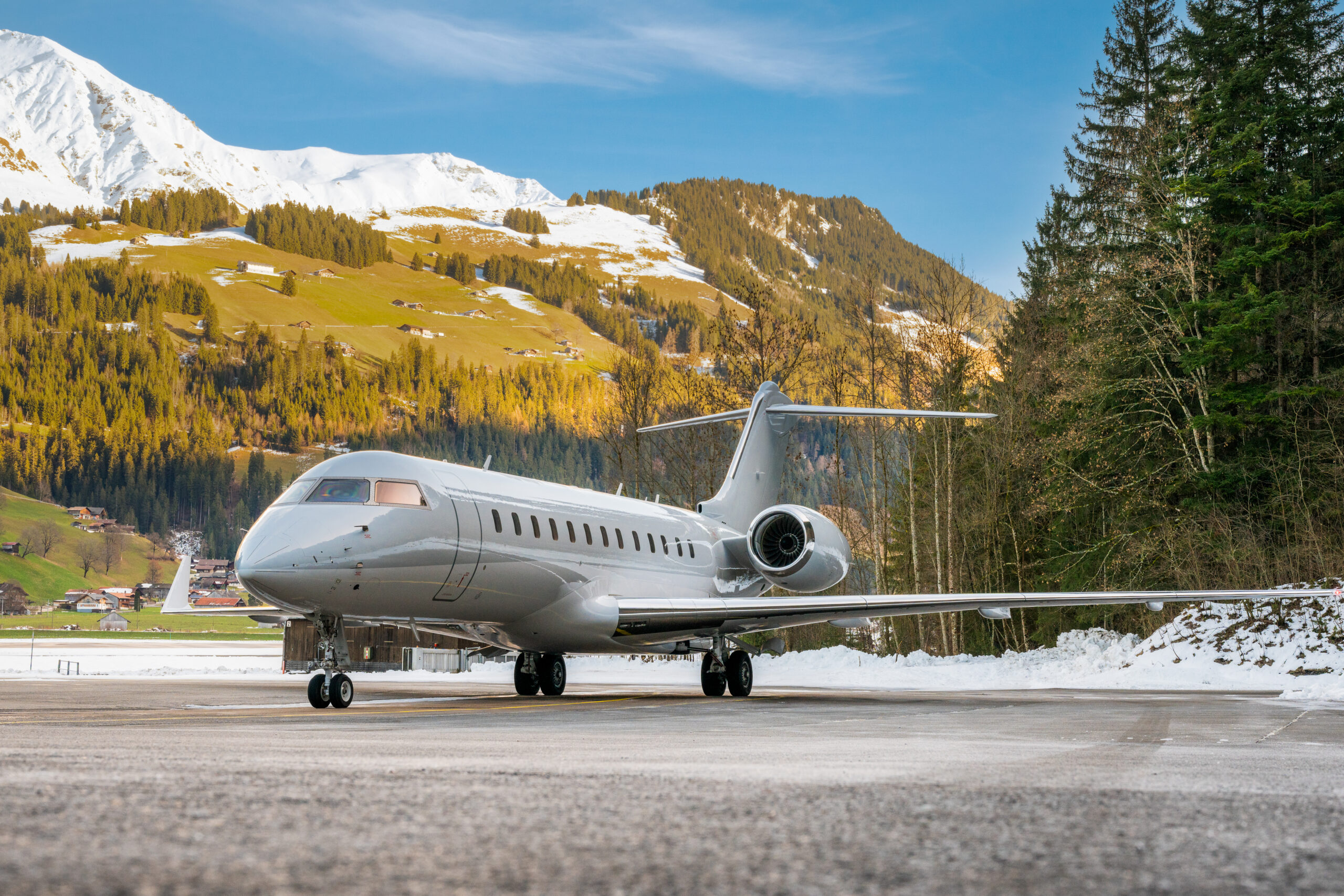
Bombardier aircraft are not simply designed for long-range travel. They reflect a broader philosophy shaped over decades, from snow-covered landscapes to global transportation networks.
Understanding this lineage allows a different reading of the aircraft itself: not only as a machine, but as the continuation of a long-standing approach to mobility.
